INDUSTRY
Hotel Event Styling
Event styling for hotel teams, corporate buyers and distinctive venues.
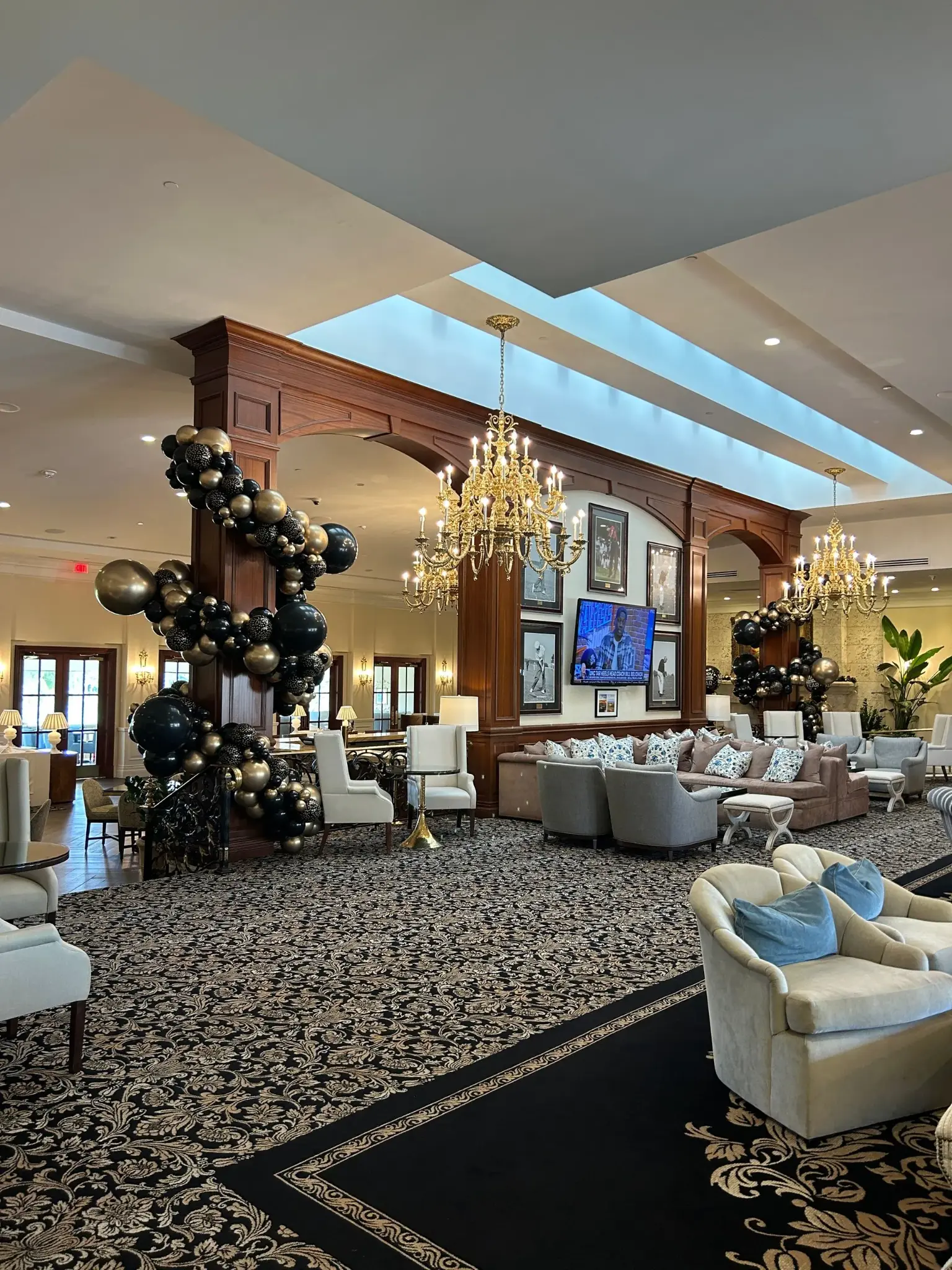
Hotel events need to feel considered from the first welcome through to the final photograph. A conference reception, awards evening, leadership gathering or Christmas dinner may use a familiar hotel setting, but the styling should still give the occasion its own character. The right approach adds atmosphere without making the room feel crowded, difficult to navigate or disconnected from the hotel’s identity.
Air & Adorn Events provides thoughtful event styling for corporate occasions in hotels, with a focus on proportion, presentation and practical coordination. Styling can support the event’s purpose, from a more confident arrival moment to a polished stage surround or a subtle branded detail at the table. Images on this page are intended as inspiration for direction and mood, not as a portfolio of completed client work.
Start with the hotel setting, not a template
Every hotel room has its own visual language. Ceiling height, natural light, carpet, fixed lighting, chandeliers, pillars, banqueting furniture and existing artwork all affect what will look balanced. A styling plan should respond to those conditions rather than placing the same arrangement into every space.
Begin by identifying what the room already does well. A large window may provide a natural focal point; a dramatic entrance may need only a restrained welcome detail; a long, low room may benefit from repeated points of interest rather than one oversized feature. Neutral styling can soften a formal function room, while a stronger colour story can help an otherwise plain space feel more distinctive. The aim is not to disguise the hotel, but to create a clear visual frame for the event.
Define the guest journey
Corporate buyers often think first about the main room, yet guests experience an event as a sequence. They may move from reception to registration, through a drinks area, into dinner, towards a stage or presentation zone and eventually to a networking space. Styling is most effective when it helps those transitions feel intentional.
Consider where guests pause, where photographs are likely to be taken and where practical information needs to remain visible. A branded welcome point can establish the tone without blocking hotel signage. A backdrop or focal installation may give guests a natural meeting point, provided it does not interfere with service routes or emergency access. Table styling can create cohesion once guests are seated, but it should leave enough space for menus, name cards, glassware and conversation.
Build a corporate colour and material direction
Hotel event styling does not need to be loud to be memorable. A disciplined palette usually feels more premium than a collection of unrelated colours. Start with the company’s brand colours, then consider whether they should be used directly, softened into complementary tones or limited to small accents. The hotel’s existing finishes should also be part of the conversation, particularly if they are distinctive.
Materials influence the atmosphere as much as colour. Matte surfaces can feel calm, reflective details can suit a formal dinner and organic textures can soften a conference reception. Repeating a small number of finishes across the entrance, focal point and tables can make a room feel resolved.
Where imagery is used to explore ideas, treat it as a visual reference only. Final styling depends on the approved brief, the hotel’s requirements, the room plan and the scope agreed for the event.
Choose focal points that support the programme
A hotel event rarely needs every surface decorated. Concentrating attention in the right places is often more effective and more practical. Depending on the brief, focal styling might support the entrance, a registration area, a stage, a presentation wall, a drinks reception or a designated photography point.
For an awards or recognition event, the focal area should complement the moment on stage rather than compete with it. For a conference, a clean branded background can provide visual consistency during presentations and photographs. For a dinner, considered table details and a restrained room treatment may create more impact than a large central feature.
Scale matters. A styling element should be legible from the distances guests will actually view it, but it should not compromise sightlines, access or the hotel’s operational requirements. A proposal should therefore consider the room plan and programme alongside the visual direction, not as an afterthought.
Coordinate styling with hotel operations
Successful hotel event styling is collaborative and scope-specific. Before anything is confirmed, the plan should take account of access windows, loading, storage, lift dimensions, installation conditions, venue approval processes and the timing of other suppliers. Post-event removal should also be discussed in advance so responsibilities and timings are clear.
Travel, venue access, branding or hire requirements, and post-event removal are confirmed as part of the proposal for the individual project. They are not assumed to be identical from one hotel or event to another. Early communication is particularly useful where the hotel has fixed furniture, protected surfaces, restricted installation methods or a tight turnaround between functions.
Air & Adorn Events works on selected projects in Dublin, Wicklow and elsewhere in Leinster where the scope and logistics are suitable. Coverage is not presented as unrestricted Leinster availability; the practical details are reviewed before a proposal is confirmed.
A practical hotel styling decision framework
Use the following sequence when reviewing a hotel event styling brief:
| Decision | Question to resolve | Why it matters |
|---|---|---|
| Purpose | What should styling help guests notice, feel or do? | Keeps the design connected to the event objective. |
| Setting | What fixed features, restrictions and sightlines shape the room? | Prevents an attractive idea becoming impractical on site. |
| Journey | Where do guests arrive, pause, gather and take photographs? | Creates a coherent experience rather than isolated decoration. |
| Priority | Which one to three areas deserve the strongest treatment? | Concentrates budget and attention where they will work hardest. |
| Brand | Which colours, wording and visual cues are approved? | Protects brand consistency and avoids last-minute substitutions. |
| Operations | What access, installation and removal arrangements apply? | Allows the proposal to reflect real venue conditions. |
Confirm the event format, guest flow, room layout, preferred mood, brand assets, focal points, hotel contact, access window, installation restrictions and removal expectations. Share approved logos, wording and colour references early. For photography, review likely camera angles; for presentations, check every element against the screen, stage and sightlines.
Plan the scope and next step
A clear brief helps distinguish essential elements from optional enhancements. Corporate styling projects start from €1,000 + VAT. The final proposal depends on the agreed scope, design direction, location, access requirements and any branding or hire considerations relevant to the event.
To discuss your event, share the hotel setting, event type, approximate guest numbers, date range, preferred atmosphere and any existing brand guidance. Air & Adorn Events can then review whether the brief is a suitable fit and outline the next practical steps. Discuss Your Event for a considered conversation about hotel event styling in Dublin, Wicklow or a selected Leinster setting.
The best hotel styling belongs in the room while still making the occasion distinct. Clear purpose and early operational planning support guests, presenters and the hotel team alike.
Air & Adorn specialises in branded balloon installations and related visual features. Furniture, tableware, linen, catering and full event management are not currently included; we can work alongside your venue team or appointed event suppliers where required.